Do Men and Women Grow Muscle Differently? A Deep Dive into Resistance Training Research
If you’ve ever heard someone say, “Men just build muscle faster,” you’re hearing a story. And as we know, stories are charming but not necessarily true. Evidence is better. Luckily, we now have more o...
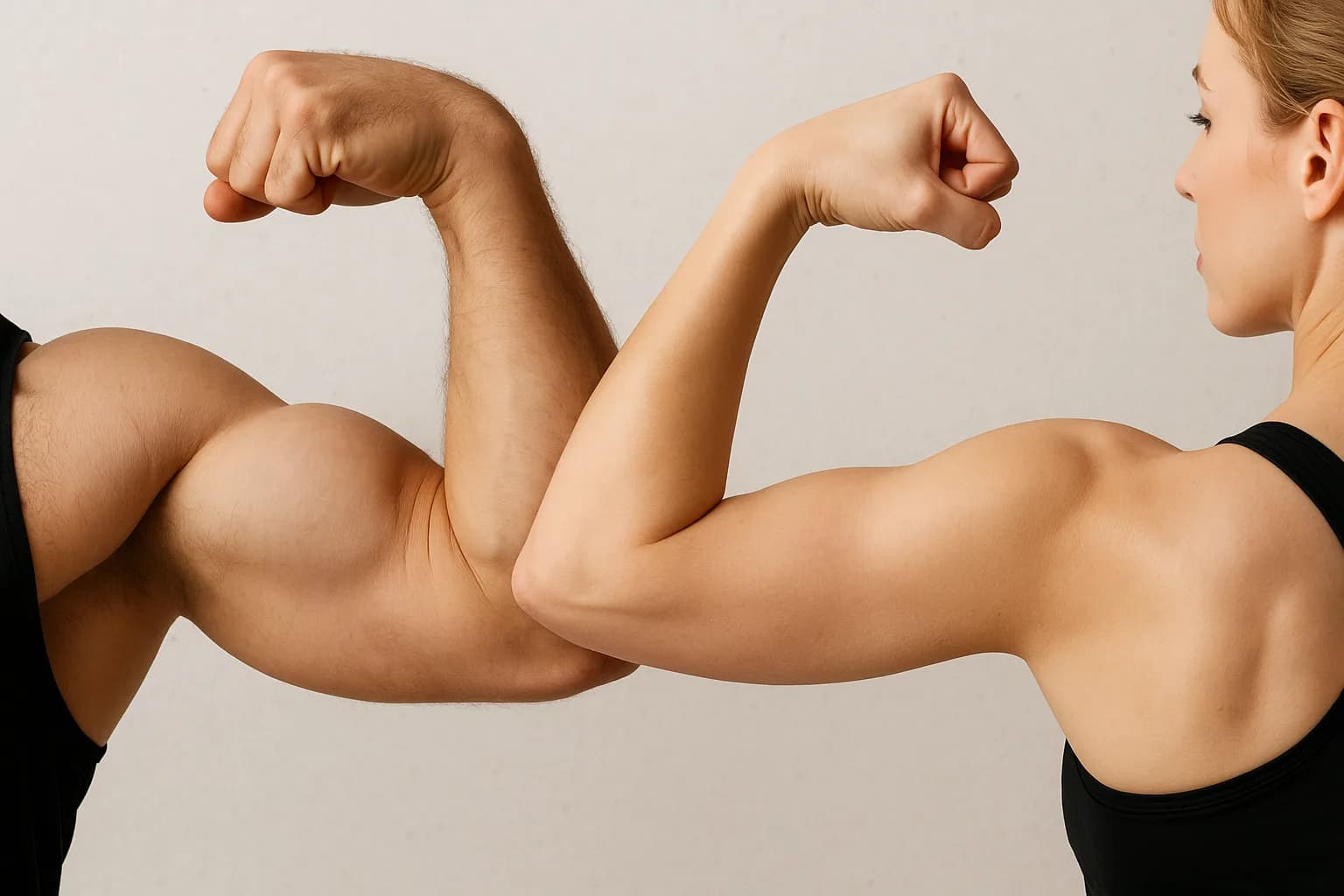
If you’ve ever heard someone say, “Men just build muscle faster,” you’re hearing a story. And as we know, stories are charming but not necessarily true. Evidence is better. Luckily, we now have more of it.
A 2025 systematic review and Bayesian meta-analysis by Refalo et al. dug into one of the most persistent gym myths: Do men and women grow muscle differently? The researchers sifted through 29 studies, pulled apart methodologies, and ran the numbers with the kind of statistical discipline that would make any data nerd tear up with joy.
The result? The real picture is more nuanced, more interesting, and genuinely useful for anyone lifting weights.
What the Researchers Examined
The analysis included healthy adults aged 18 to 45 completing structured resistance training programs. They compared
• Absolute hypertrophy (raw size increase) • Relative hypertrophy (percentage change from baseline) • Differences across muscle groups • Differences across fibre types • Moderators like training experience and measurement method
In short: a proper evidence-based approach, not a “my cousin said so” approach (but we still love your cousin).
The Big Findings
Absolute vs Relative Gains
Absolute muscle growth: Men gained slightly more in raw size. Effect size: 0.19
Relative muscle growth: Men and women improved at almost identical rates.
This is the part that matters for your training: Once you adjust for starting muscle mass, women build muscle just as effectively as men.
Body Region Differences
Upper body: Men had slightly higher absolute increases.
Lower body: No meaningful differences.
Lower-body parity makes sense: women typically start closer to men in relative lower-limb muscle mass, so the playing field is level.
Muscle Fibre Type
Type I fibers: Very small advantage in men.
Type II fibers: No sex differences at all.
Given that hypertrophy is heavily driven by type II fibers, this is another vote for equality in training potential.
Factors That Didn’t Matter
• Training experience • Measurement method • Whether someone had a favorite gym selfie angle (not studied, but we can guess)
What This Means for Real-World Training
This is where the science meets your squat rack
- 🎯 Women have similar growth potential relative to their baseline. Those “I can’t build muscle” assumptions are outdated.
- 🎯 Training programs don't need major sex-based adjustments. Volume, intensity, progression: the fundamentals stay the same.
- 🎯 Upper body differences shouldn’t be discouraging. Smaller absolute gains do not mean slower progress.
- 🎯 Track relative changes. A 10 percent increase is a 10 percent increase—regardless of starting point.
Practical Takeaways You Can Use Today
Prioritize progressive overload. Sex isn’t a training variable. Load, volume, recovery are.
Don’t obsess over absolute numbers. A 2 cm increase on a smaller arm is still meaningful hypertrophy.
Expect strong lower-body progress across the board.
Use consistent methods to measure change—DXA, tape measure, or photos—but interpret results with context.
Bottom Line
The research is clear: relative muscle growth potential between men and women is nearly identical. The differences people obsess over are mostly explained by starting size, not biology that locks anyone out of hypertrophy.
For trainers and clients, the message is simple:
Train hard, progress consistently, and ignore the myths. The physiology is on your side.
If you want your training data and progress insights to actually reflect this reality, the Juice app gives you structured logging, trend tracking, and a clear view of your progress—without the folklore.
reference: https://pmc.ncbi.nlm.nih.gov/articles/PMC11869894/